Where the Krakow Ghetto Actually Was, and What Remains
The WWII ghetto was in Podgorze, across the river from Kazimierz. Ghetto Heroes Square, the Eagle Pharmacy and the wall fragments, placed correctly.
The Krakow ghetto was in Podgorze, on the south side of the Vistula, not in Kazimierz. The two get mixed up because Steven Spielberg filmed the ghetto street scenes in Kazimierz — its older streetscape had survived largely unchanged, while the real square had gained a bus station by the 1990s — not because the ghetto was ever there.
The surviving ghetto sites are public streets and squares, free to walk on your own, and the Eagle Pharmacy is a branch of the city museum with its own ticket. If you’d rather walk it with a guide, Tours with Ewa’s small-group tour combines entry to the Factory with a guided walk into Podgorze itself. Max 14 people, from $50 per person, rated 4.6 from 929 reviews.
Where the ghetto actually was
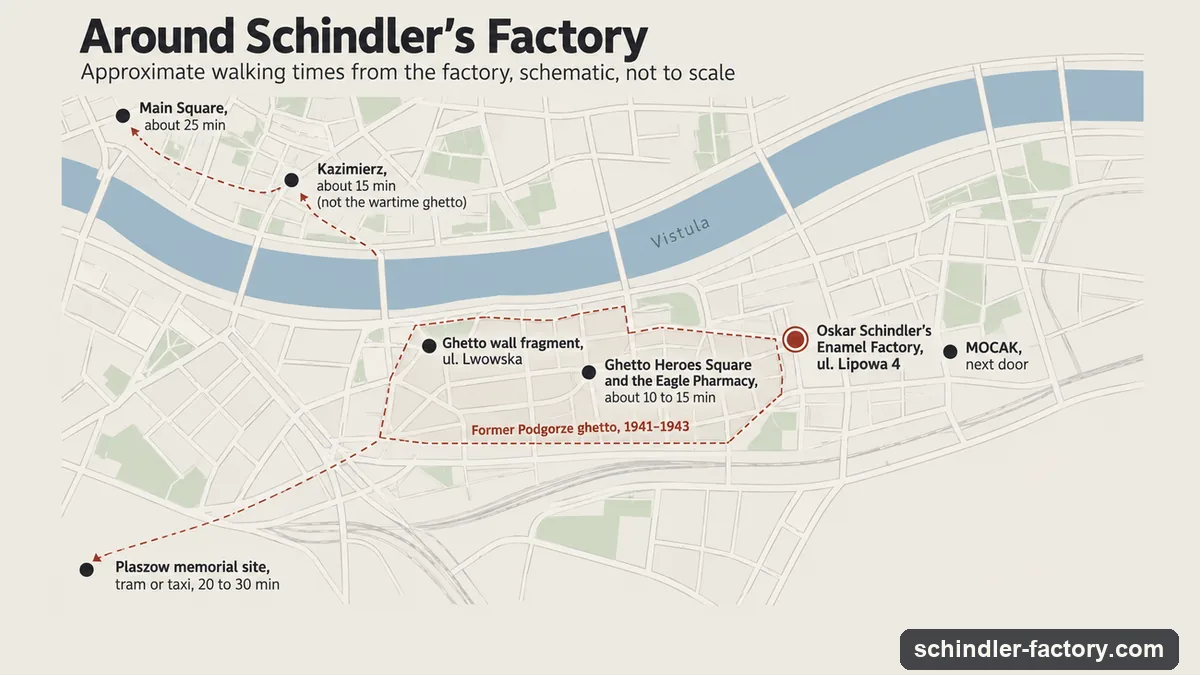
The Germans ordered the ghetto built in Podgorze from early March 1941; Jews were required to move in by 20 March and the area was sealed a day later. Between 15,000 and 20,000 people were packed into roughly 320 existing tenement buildings, enclosed by barbed wire and, in places, newly built stone walls, some sections shaped to resemble tombstones. A tram ran through on Lwowska and Limanowskiego streets without stopping; passengers were forbidden to look in, though food parcels were sometimes thrown from the windows anyway. The ghetto was liquidated on 13 March 1943; survivors were sent on to the Plaszow camp or directly to killing centres.
Ghetto Heroes Square
Plac Zgody — Concord Square, an ironic name even then — was renamed Plac Bohaterow Getta, Ghetto Heroes Square, after the war. In 2005 the city installed a memorial of 70 oversized chairs, designed by Piotr Lewicki and Kazimierz Latak, representing furniture left behind during the deportations. The idea that each chair stands for 1,000 victims is widely repeated online, but it isn’t something the architects have confirmed, so treat it as a popular reading rather than a stated fact.
The Pharmacy Under the Eagle
At Plac Bohaterow Getta 18 stood the Pharmacy Under the Eagle, run throughout the war by a Polish pharmacist, Tadeusz Pankiewicz — the only non-Jewish business owner allowed to keep operating inside the ghetto walls. He supplied medicine and used the pharmacy as an informal point of contact and aid, and was later honoured as Righteous Among the Nations. It’s now a small museum branch of its own, part of the same network as the Factory.
What’s left of the wall
Not much, and not as a wall you can walk along. Two short fragments survive: about 12 metres on ul. Lwowska, with a bilingual Hebrew-Polish plaque, and a lower, easy-to-miss piece in a park behind a school at ul. Limanowskiego 60/62. Both sit inside the same small, walkable former-ghetto footprint as the Square, a short distance from each other.
A longer walk, or none at all
Krakow4you.pl also runs a longer version of the pairing above: three hours total, with a full hour of walking that ends at the Square itself, from $59 and rated 4.8 from 82 reviews — see its own tour page for the details. For readers who want the neighbourhood without a museum ticket at all, EXCURSIONS CITY’s two-hour walk covers Kazimierz and Podgorze on foot, from $28 and rated 4.7 from 463 reviews, without entering the Factory.
Kazimierz, for comparison
Kazimierz is Krakow’s older Jewish quarter, founded as a separate town in the 14th century and absorbed into the city later; on the eve of the war it was home to most of a Jewish population of roughly 56,000 across Krakow as a whole. It was never inside the ghetto’s wire. Today it’s the city’s restaurant and synagogue-tourism district, and still worth walking on its own terms — just not as “the ghetto.”
Plaszow, afterward
Many of the people deported from this ghetto went first to Plaszow, the camp a short tram or taxi ride away. The Plaszow guide covers what’s there to see now, which is very little in the way of surviving structures. Who Oskar Schindler was covers the factory side of this same period, and is it worth visiting weighs the whole neighbourhood against the rest of a Krakow visit. Every guided option is compared on the homepage.
Sources: USHMM, krakow.travel, the BBC and muzeumkrakowa.pl; product details from the operators’ own listings. Checked October 2026.
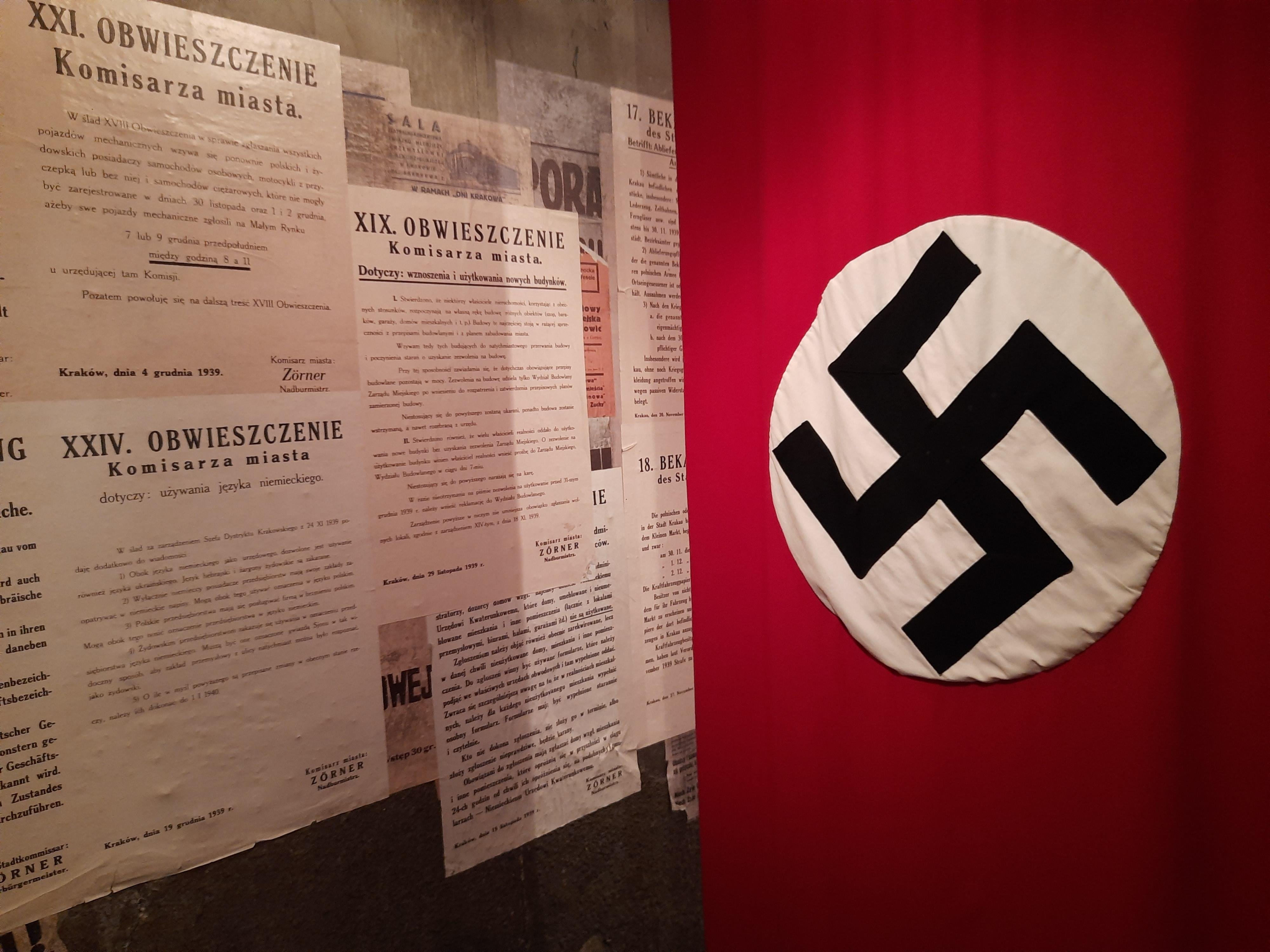
Factory and Ghetto, With a Guide
Tours with Ewa's small-group tour includes entry to the Factory, then continues on foot into the former ghetto in Podgorze. Max 14 people, from $50 per person, rated 4.6 from 929 reviews.
Check Times & Book